Mez Studio. One cable in, nothing on show.
A raised desk workstation that hides every socket, charger and cable under a lift-off solid-wood top. I took it from a blank page to a funded launch plan: market sizing, customer research, two rounds of prototypes, an MVP, pricing and go-to-market, ending in a ₹10 crore ask with a hard go/no-go gate.
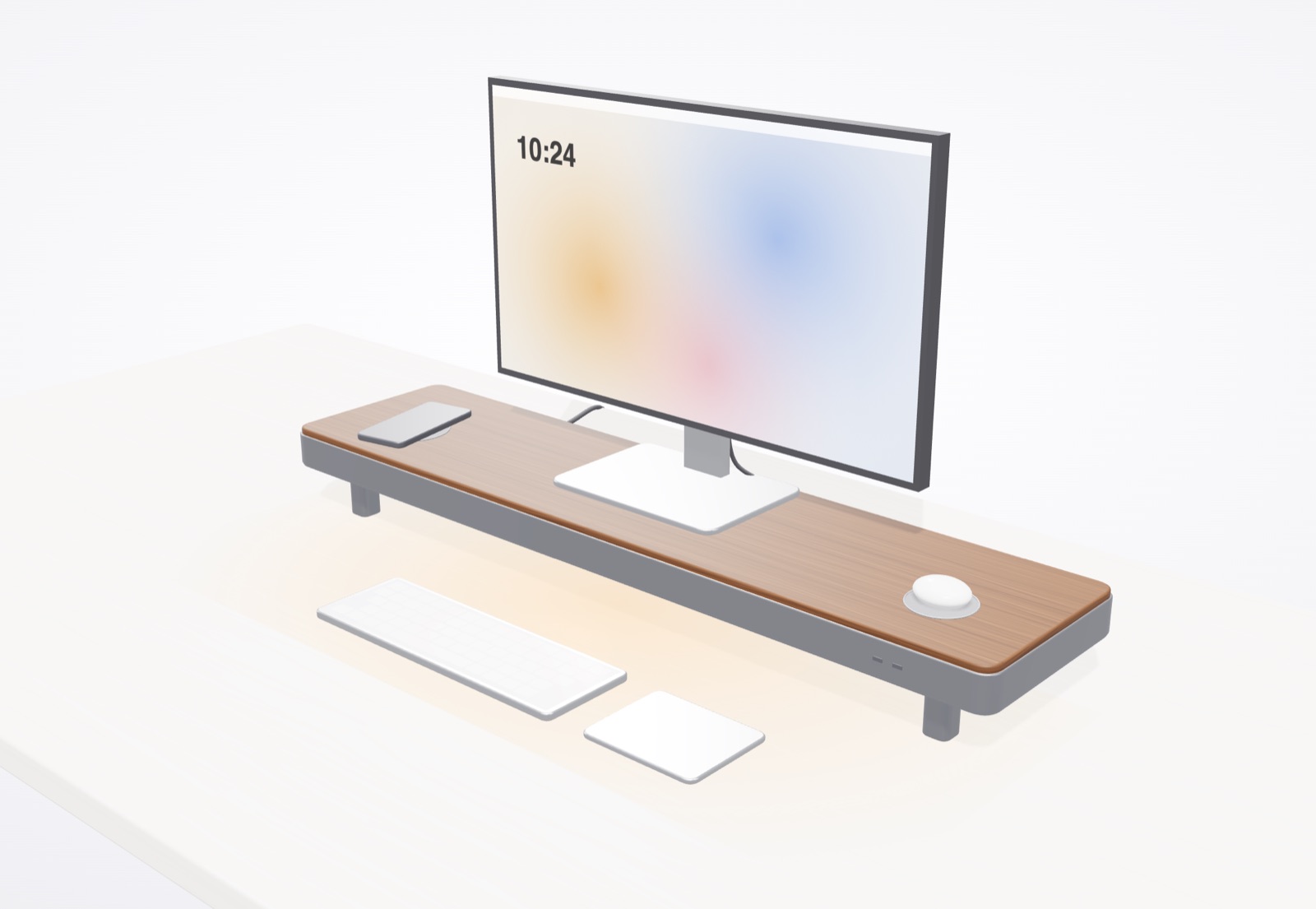
Five products, seven cables, and a desk that looks like a server room.
Hybrid work moved millions of Indian professionals onto a home desk. Their setup grew one purchase at a time: an extension board on the floor, three or four chargers, a USB-C hub, a monitor riser, a desk lamp. Creators and gamers add ring lights, mics, consoles and more power bricks.
The result is the same everywhere I looked. Cables show on every video call. People re-plug their laptop, monitor and hub every morning. Cheap adapters fail during voltage dips. And the person who spent ₹45,000 to ₹1,40,000 on their setup still has a desk they don't like looking at.
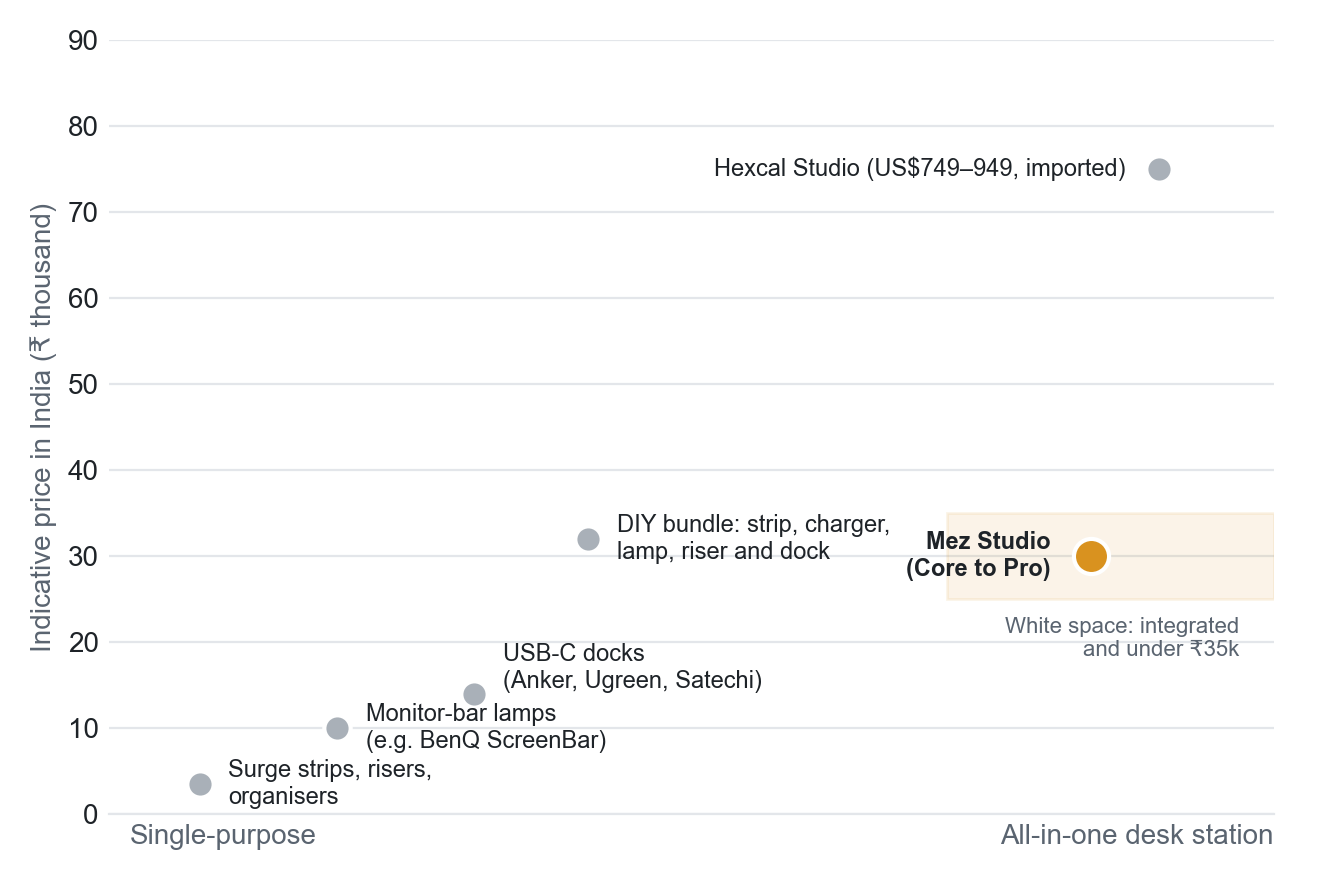
Abroad, a small category solves this: a raised shelf with the power built in. The leader, Hexcal, sells it for US$749 to 949. It isn't sold in India, has no Indian sockets, no local warranty and no service. So Indian buyers assemble a DIY bundle of five to seven products for ₹27,000 to 39,000, with five warranties and no unified design.
A new vertical, built on what the brand already does well.
The company is a fast-growing Indian D2C brand known for design-led bags, cases, chargers and desk accessories, selling through its own website and app, marketplaces, and a store network it is expanding quickly. Its customers are urban professionals aged 22 to 40 who pay for design.
I proposed Mez Labs, a new vertical for powered workspace products, with Mez Studio as its first product: an aluminium-and-wood workstation that hides the sockets, chargers and cables under a lift-off top.
Why this company can win
- Trust in the exact category. Customers already buy their premium desk and charging accessories here.
- Reusable assets. An in-house design team, an existing charging supply chain, D2C customer data, and stores where a ₹30,000 product can actually be touched.
- Lower risk than it looks. On Ansoff's matrix this is product development: a new product for existing customers, through existing channels. Creators and gamers are a partial stretch into new markets, so they come second, once the core segment fits.
3.77 million Indians can buy a premium desk station today.
I sized the market bottom-up from three segments, filtering each down to people with a dedicated desk and a premium budget. The filters are my assumptions; the base numbers come from ADP, BCG, nasscom and BITKRAFT/Redseer reports.
| Segment | How I got there | Buyers |
|---|---|---|
| Hybrid / remote professionals | 30 M knowledge workers × 50% hybrid or remote × 20% with a home desk and ₹20L+ income | 3.00 M |
| Desk-based creators | 2.25 M active creators × 40% desk formats × 30% investing in a setup | 0.27 M |
| PC / console gamers | 500 M gamers × 20% on PC × 5% enthusiasts × 10% premium budget | 0.50 M |
| Serviceable market | ≈ ₹11,700 crore installed base at a ₹31k average price; ≈ ₹2,340 crore a year on a 5-year replacement cycle | 3.77 M |
Demand forecast: Q = N × A × P
Units sold each year are buyers (N) × the share who are aware of Mez (A) × the share of aware buyers who buy that year (P). P is concept-test purchase intent calibrated down to about 33% (stated intent always overshoots), times the roughly 12% of buyers in the market for a desk upgrade in any given year.
| Year 1 | Year 2 | Year 3 | |
|---|---|---|---|
| N · serviceable buyers | 3.77 M | 3.77 M | 3.77 M |
| A · aware of Mez | 5% | 10% | 15% |
| P · buy that year | 4.0% | 4.5% | 5.0% |
| Units | 7,500 | 17,000 | 28,300 |
| Revenue | ₹23 cr | ₹53 cr | ₹88 cr |
Competition: the integrated, under-₹35k space is empty
Every competitor solves one job. USB-C docks (₹2k to 30k) handle connectivity but add cables. Monitor lights (₹8k to 15k) only light. Surge strips (₹1k to 6k) are cheap, ugly and live on the floor. Risers and organisers (₹1.5k to 5k) have no power at all. The real substitute is the DIY bundle of all of them, and the only integrated product is an import at two to three times the price.
Going first is worth about ₹25 crore a year by Year 3.
I used Urban et al.'s (1986) order-of-entry model, where a later entrant's long-run share relative to the pioneer is (order of entry)−0.49. With three brands eventually in the category, entering first gives a long-run share of 43.6%; entering second gives 31.0%. That 12.6-point gap is roughly 8,000 units, or ₹25 crore a year, by Year 3.
Going first means owning the "desk station" slot in customers' minds, setting the price reference, and locking up creators, store shelf space and CNC supplier capacity. It also has costs, and each one needs a plan:
Educating a new category
Nobody searches for "desk station" in India yet. The answer is a "replaces five things" story and in-store demos where people can lift the top themselves.
Cheaper copycats
Registered designs, plus our own lower-priced Lite model in Year 2 so price-sensitive buyers have somewhere to go that isn't a knock-off.
A short window
Twelve to eighteen months before others notice. That sets the launch date: Diwali 2027, India's biggest buying season.
Safe power and a tidy desk matter most. Nobody wants an app.
I ran 35 to 40-minute one-on-one conversations with five potential customers across all three segments. I asked about problems and past behaviour rather than wishes ("tell me about the last time something on your desk went wrong"), walked through their most recent desk purchase step by step, then had each person rate 14 product benefits from 1 to 5 and pick the three they'd keep if they could keep only three.
| ID | Segment | City | Occupation | Desk spend, 2 yrs |
|---|---|---|---|---|
| P1 | Hybrid professional | Bengaluru | Senior product designer, SaaS | ₹68,000 |
| P2 | Hybrid professional | Pune | Engineering manager, IT services | ₹45,000 |
| P3 | Creator | Mumbai | Full-time tech and lifestyle creator | ₹1,40,000 |
| P4 | Creator | Delhi NCR | Freelance video editor | ₹85,000 |
| P5 | Gamer | Hyderabad | Engineering student, part-time streamer | ₹62,000 |
Primary persona: Meera, 31, the hybrid professional
Goals
Look composed on daily client calls. A calm, tidy workspace she's proud to show. Protect her posture and her devices.
Pains
Re-plugging laptop, monitor and hub every morning. Cables on camera. Lamp glare on her screen. Adapters fried by voltage dips. Four chargers to keep track of.
Today
A 6-socket extension board on the floor, a USB-C hub, a monitor riser and a lamp: about ₹68,000 spent piecemeal in two years. She skipped a ₹55,000 imported desk shelf because she couldn't see it in person first.
Two secondary personas round it out. Sana, 27, a creator in Mumbai: her desk is a recurring video set, so she wants a camera-ready look, more USB-C for lights and a mic, and room for a 32" monitor ("My desk is in half my videos"). Vikram, 22, a gamer and student in Hyderabad: he needs sockets and surge protection for a PC, PS5 and lights, waits for festival sales, and doesn't need a laptop dock ("₹25k is a GPU-level decision for me").
Customer journey: what Meera feels, and what Mez does about it
| Stage | What she thinks and feels | What Mez Studio does |
|---|---|---|
| Trigger | New role, more video calls, moving home, a fried adapter. "My desk looks and feels chaotic." | Content built around real triggers: WFH, monsoon power surges |
| Awareness | Curious and aspirational from desk-tour reels, but the products she sees aren't sold in India | Seed 50 desk-setup creators; store windows; a "replaces 5 things" message |
| Consideration | "Is it worth ₹30k? Will it suit my desk?" She can't touch it online. | Online configurator, DIY cost comparison, 20-minute store demos |
| Purchase | Excited, but anxious about a big spend and a bad fit | No-cost EMI from ₹2,084/month, ₹999 refundable deposit, 30-day returns |
| Set-up | "Please let this be easy." Wiring anxiety. | Free installation in 8 metros, 15-minute set-up video |
| Use | Calm, in control, proud. Then she adds a device. | Lift the top in seconds; spare sockets and bridging ports inside |
| Advocacy | Wants to show it off, but has no reason to share | ₹2,000 referral credit, "Share your desk" |
What they rated (mean importance, 1 to 5)
| Rank | Benefit | Mean | Rated 4–5 | Kept in top 3 |
|---|---|---|---|---|
| 1 | Enough sockets with surge protection | 4.6 | 100% | 3 of 5 |
| 2 | Hides cables for a tidy desk | 4.6 | 80% | 4 of 5 |
| 3 | Much cheaper than imported alternatives | 4.0 | 60% | 2 of 5 |
| 4 | Glare-free light bar | 3.8 | 60% | 1 of 5 |
| 5–8 | Fast USB-C charging, monitor at eye level, premium materials, made in India | 3.6 | 40–60% | 0–1 each |
| 12 | One-cable laptop dock | 3.0 | 40% | 1 of 5 |
| 14 | Companion app | 2.2 | 0% | 0 of 5 |
- Safe power and a tidy desk are the core job. They lead on both the rating and the forced choice, so they have to be best-in-class in every model.
- Price versus imports is the reason to believe. A premium price is fine when it's clearly far cheaper than the Western alternative.
- Docking splits the market. Laptop users rated it 4 to 5; PC users rated it 1 to 2. It belongs on the top model only.
- Cut the app and the drawers. They scored lowest of all 14 (2.2 and 2.8), and nobody rated the app 4 or above. The light gets a touch control instead, which also removes a whole software risk. Storage moves into the hidden chamber.
- Try-in-store and EMI matter to specific people, the older professional and the young freelancer. Those are channel promises, not product features.
Three tiers, one idea: lift the top, everything's there.
| Model | Price | What it adds |
|---|---|---|
| Core | ₹24,999 | Raised shelf, 6 hidden surge-protected sockets, 2 front USB-C ports, one power cable through the leg |
| Studio | ₹29,999 | 8 sockets, 2 wireless charging pads in the wood, under-shelf light, bridging ports inside |
| Pro | ₹34,999 | 2 Thunderbolt 4 ports: one cable docks a laptop to monitor, network and drives |
Two sizes (100 cm, and 120 cm for +₹3,000), three finishes, and add-ons. Every model comes with a 2-year warranty, free installation, 30-day returns and no-cost EMI.
High opportunity, concentrated risk: stage it
On an opportunity-cost vs development-risk grid, the full product sits in the hardest quadrant. Opportunity cost is high because the category is empty and the window is short. Development risk is high because of mains safety in a closed chamber, BIS certification and Thunderbolt firmware. But the risk isn't spread evenly: most of it sits in Thunderbolt docking, which matters to the fewest customers. Pulling Core and Studio forward on pre-certified power modules moves the MVP into "high opportunity, manageable risk".
This is also high firm newness (mains-powered, installed hardware is new for this company) with moderate market newness (familiar parts, new category). So I had to test both kinds of fit:
| Fit | Question to test |
|---|---|
| Product / market | Will people pay ₹25 to 35k instead of a ₹27 to 39k DIY bundle? |
| Product / market | Which features are must-haves, and which are optional? |
| Product / market | Is the value clear at a glance? Which tier wins? |
| Product / company | Can our channels sell a bulky, high-ticket product? |
| Product / company | Can we install, service and hit quality at cost? |
Business model
D2C-led, omnichannel hardware. Stations are about 85% of revenue, add-ons about 10%, extended warranty about 3%, with B2B (corporate WFH programmes) from Year 2. The Studio model nets ₹25,423 after GST against a ₹13,700 unit cost: a 46% gross margin, and about 34% contribution after a ₹3,000 acquisition cost.
Rough sketches and a clickable buying flow.
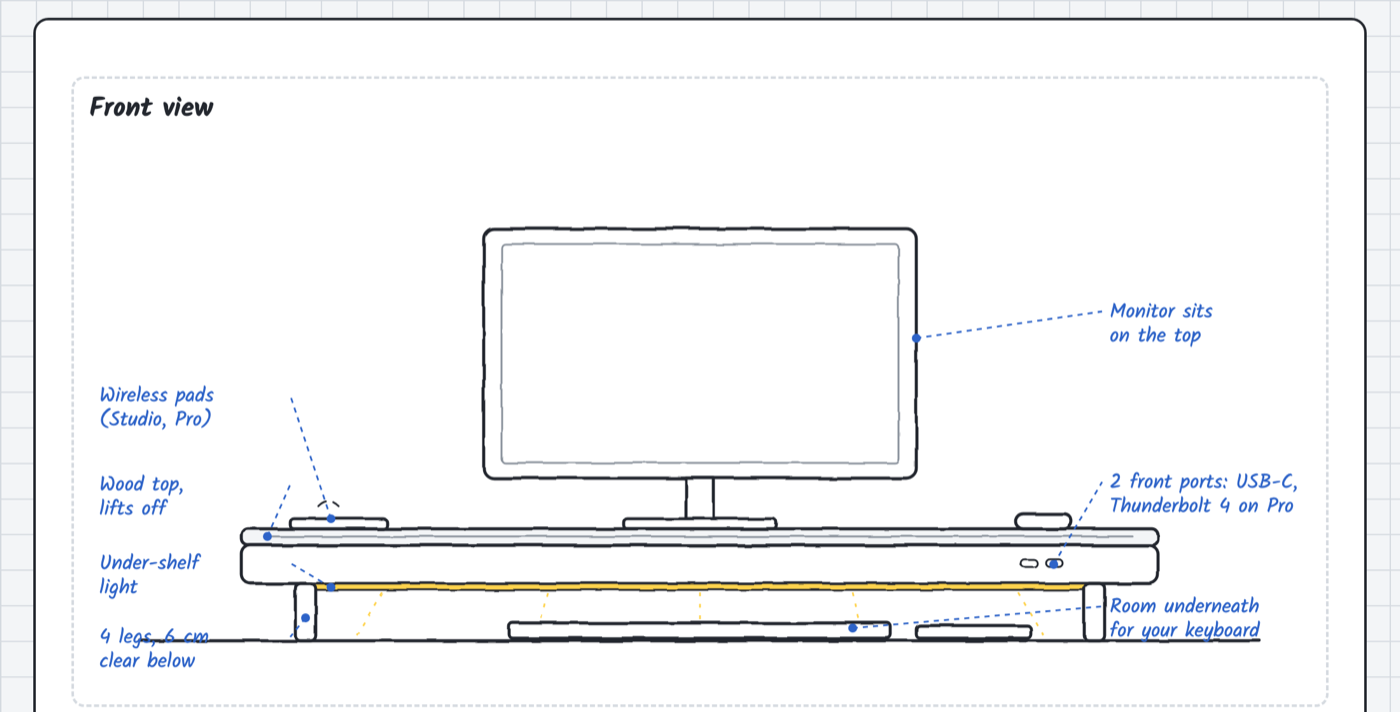
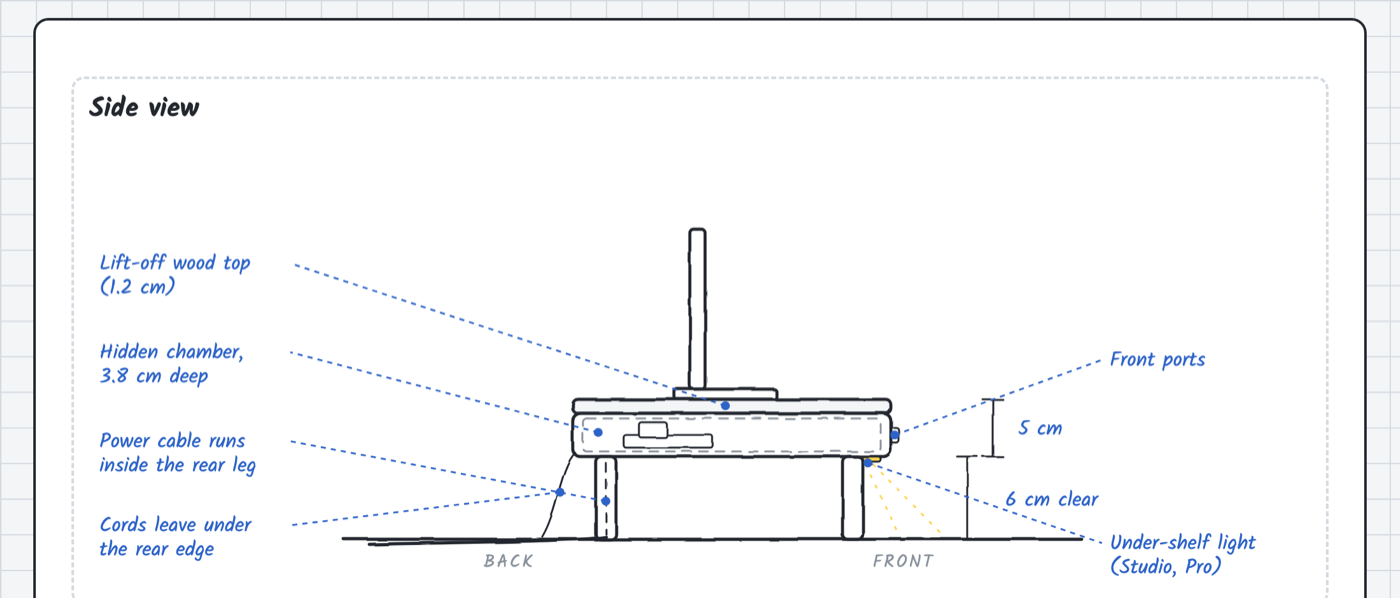
For a physical product, the prototype had two parts, both deliberately rough so people would react to the idea rather than the polish: annotated sketches of the product (front, side, and the top lifted off), and a clickable lo-fi web prototype of the buying flow. The prototype quietly logged each tester's choices and time on every screen into a facilitator log I could copy at the end of each session.
Method
About 30 minutes each with three of the five customers, one per segment (P1 professional, P3 creator, P5 gamer). Each person thought aloud through five tasks, followed by a short structured close so the qualitative findings could sit next to a few numbers.
- First look. Ten seconds on the product page, then say what it is and who it's for.
- Choose a model. Find the one that connects a laptop with one cable.
- Make it yours. Finish, size and add-ons for their own desk.
- Get it. Go as far as they really would: pay, EMI, deposit or store demo.
- Lift the top. Look at the sketch with the top off and say what's missing inside.
- Close. 5-point purchase intent, the Juster 0 to 10 purchase probability scale, model choice, four Van Westendorp price questions, and likelihood to recommend.
Results
| Measure | P1 Professional | P3 Creator | P5 Gamer | Overall |
|---|---|---|---|---|
| Understood it in 10 seconds | Yes | Yes | Partly ("a monitor stand with chargers") | 2 of 3 |
| Picked the right model unaided | Yes (Pro) | Partly (Studio, then Pro) | Yes (Core: no laptop) | 2 of 3 |
| Configured their setup | Yes | Yes (120 cm, desk mat) | Yes (no add-ons) | 3 of 3 |
| Got through "get it" without hesitating | Partly (chose deposit) | Yes (12-month EMI) | Partly (asked for a student price) | 1 of 3 |
| Purchase intent | Probably would | Definitely would | Might or might not | 2 of 3 top-two-box |
| Juster (0–10) | 7 | 9 | 4 | 6.7 avg |
| Model chosen | Pro | Pro | Core | Studio: 0 |
| Likelihood to recommend | 8 | 9 | 7 | 8.0 avg |
Two of three testers in the top two boxes clears the 50% bar the course uses as a signal to proceed, but with three people that's a direction, not a statistic. The more useful output was what each person did and said:
What we learned, and what changed
Lead with the reveal
Laptop users got it instantly. The gamer saw "a monitor stand with chargers" until he saw the top lifted off. So every demo and video now starts by lifting the top, and the message became "one cable in, nothing on show."
Drop the app; Thunderbolt stays on Pro only
Nobody asked for an app, and docking mattered only to laptop users. The light gets a touch control.
Build for creators' extra gear
Creators need power and data for key lights and a mic inside the chamber, plus somewhere to mount an arm. Bridging ports stay on Studio and Pro; a rear-edge arm mount becomes a 2028 accessory.
Lower the fear at checkout
Two of three hesitated at payment and wanted to see it first. Keep the ₹999 refundable deposit, put demo units in stores, and make 30-day returns prominent.
Don't discount for gamers; give them a product
Prices sat inside the acceptable range, but gamers' budget is ₹15 to 25k. Instead of cutting prices: the light becomes a Core add-on, and a lower-priced Lite model goes on the roadmap.
Make Studio the hero
Nobody picked Studio; it sat between a cheaper Core and a more useful Pro. It becomes the default "most chosen" option, and the next survey tests a Studio + Thunderbolt variant. The gamer wanted 8 sockets on Core, so that gets tested too.
Next step before any tooling: a quantitative survey of about 150 people across the three segments, to confirm feature priorities, tier mix and price ranges at a scale where the numbers mean something.
A high-fidelity 3D configurator. Try it.
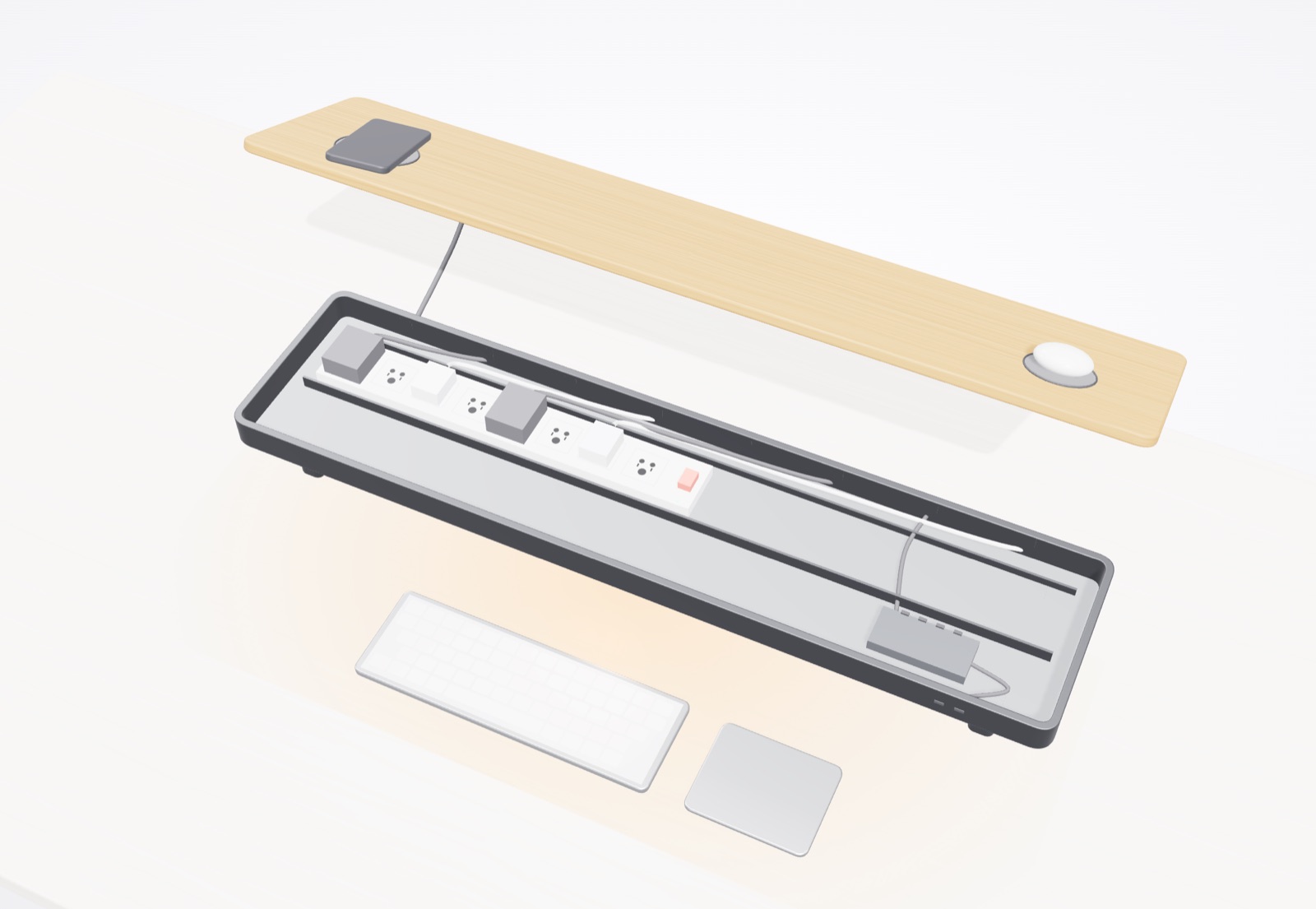
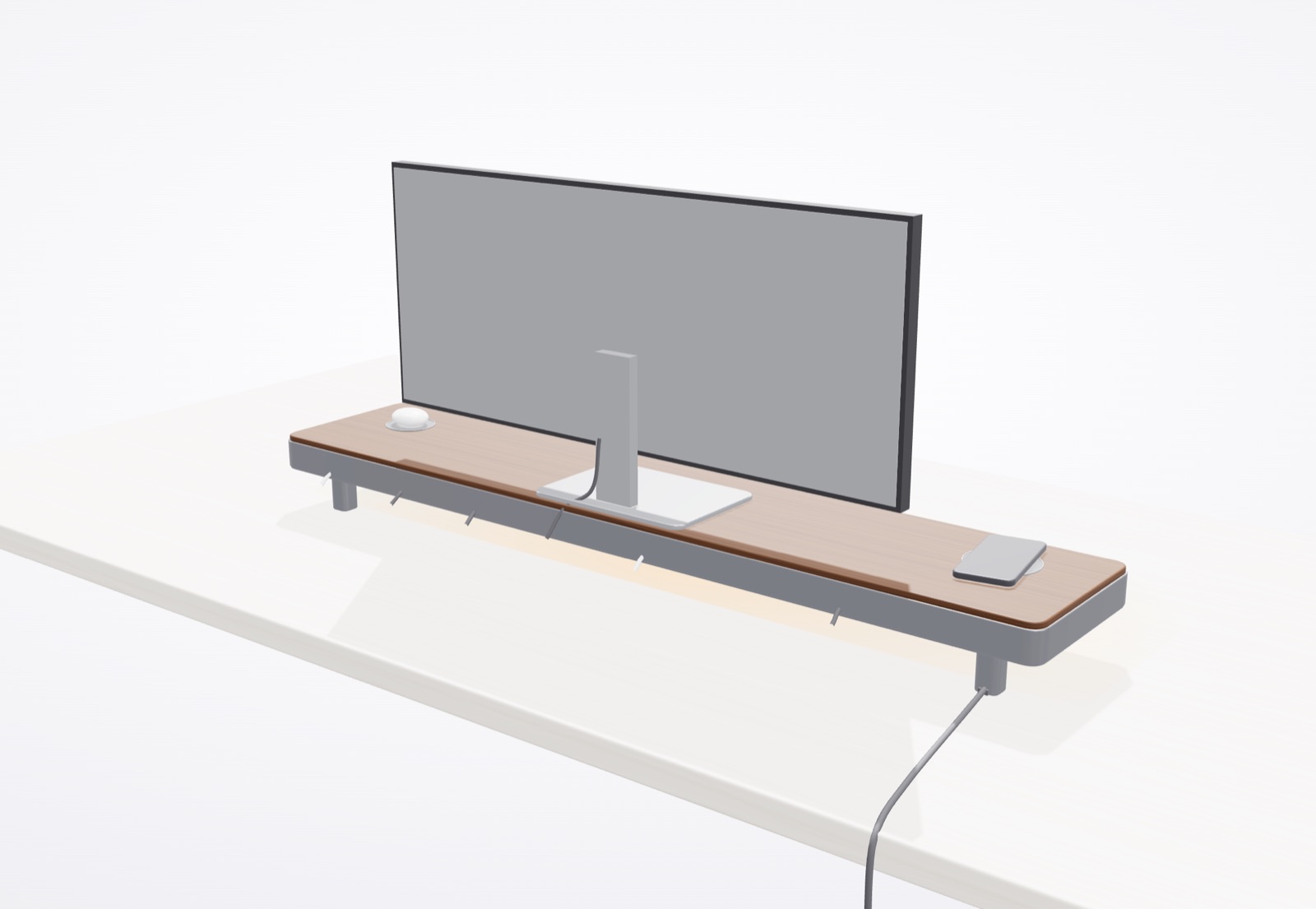
Testing showed people only understood Mez Studio once they saw everything hidden away. So the design moved further toward a true workstation: a slim aluminium tray on four slim legs with 6 cm of clearance, a lift-off solid-wood top over a hidden power chamber, two front ports, an under-shelf light, and a single power cable running down inside the rear-left leg. Drawers and the app are gone.
To test that design without tooling anything, I built an interactive 3D configurator in the browser. Rotate it, lift the top, switch model, finish and size, and adjust the light. It has three jobs: stimulus for the 150-person survey, the configurator on the brand's website at launch, and a demo tool for store staff and creators.
Build an MVP: Core and Studio for Diwali 2027.
The opportunity cost is high, so speed matters. The riskiest part (Thunderbolt) matters to the fewest customers. And the real unknown, whether people will pay ₹25 to 30k for this online, can only be answered with real money. All three point to an MVP.
Core and Studio
100 and 120 cm, two finishes. Hidden chamber with 6 or 8 sockets, 2 front USB-C, pads and light on Studio. Pre-certified power and charging modules. A 500-unit pilot in August, then 2,000 units for Diwali.
Pro and the extras
Thunderbolt 4 docking and bridging ports (January 2028), the third finish, and accessories. Each waits until the MVP proves people will pay.
Early success factors, first 90 days
| Metric | Target |
|---|---|
| Refundable deposits in 8 weeks | ≥ 1,500 |
| Deposit-to-purchase conversion | ≥ 40% |
| "Very disappointed" without it (Sean Ellis test) | ≥ 40% |
| Return rate within 30 days | ≤ 5% |
| Warranty claims · safety incidents | ≤ 2% · zero |
| Installation satisfaction | ≥ 4.5 / 5 |
| NPS · organic share of orders | ≥ 40 · ≥ 25% |
| Add-on attach rate | ≥ 30% |
Roadmap
Discover
Survey of ~150, design, engineering validation units, suppliers
Build the MVP
Design and production validation, BIS certification; pre-order smoke test in June
Launch
500-unit pilot, Diwali launch, demo stores from 3 to 15
Pro
Thunderbolt 4 docking, bridging ports, third finish
Accessories
Arm mounts, clamp kits, corporate sales, marketplaces
Expand
Mez Lite at ~₹14,999, tier-2 cities, a Southeast Asia study
How we'd know we have product-market fit
Start narrow: laptop professionals and creators in eight metros. Track monthly cohorts on the Sean Ellis test, NPS, returns and organic share, and call ten owners from every cohort. PMF means two consecutive cohorts at ≥ 40% "very disappointed", ≥ 30% organic orders and ≤ 5% returns. Only then scale.
Growth experiments
| Goal | Experiment | Measure |
|---|---|---|
| Acquire | Creator seeding vs paid ads; a "desk makeover" contest | Cost per deposit |
| Use well | White-glove install vs guided self-install | % set up within 7 days |
| Retain | Day-45 accessory bundle; arm-mount invite | Repeat purchase |
| Refer | ₹2,000 credit for both sides vs a free desk mat | Referrals per 100 owners |
| Revenue | Studio-first vs Pro-first display; EMI-first pricing | Tier mix, average order value |
Design thinking finds the problem, lean tests it, agile builds it.
Are we solving the right problem?
Desk visits, photo diaries and review mining. A problem definition: "a desk that powers everything safely and looks calm on camera." Cross-functional ideation. Prototypes from sketches to the 3D configurator to works-like units. Twenty in-home trials and safety tests.
What's the cheapest test of the riskiest assumption?
A pre-order smoke test before any tooling. Pre-certified modules in the MVP. No Thunderbolt tooling until demand is proven. Every release ships with a hypothesis, a metric and a decision rule.
How do we build and improve quickly?
One "Mez squad": PM, design, mechanical, electronics, two software engineers, QA, supply, research and growth. Two-week sprints for web and firmware; four to six-week hardware loops through engineering, design and production validation. Safety is part of the definition of done; the backlog is ranked with RICE.
Who sees what, when
Quarterly roadmap planning. Sprint reviews with five real users, not just the team. A monthly steering meeting with the CEO on the MVP metrics.
Value-based tiers, inside the range customers accept.
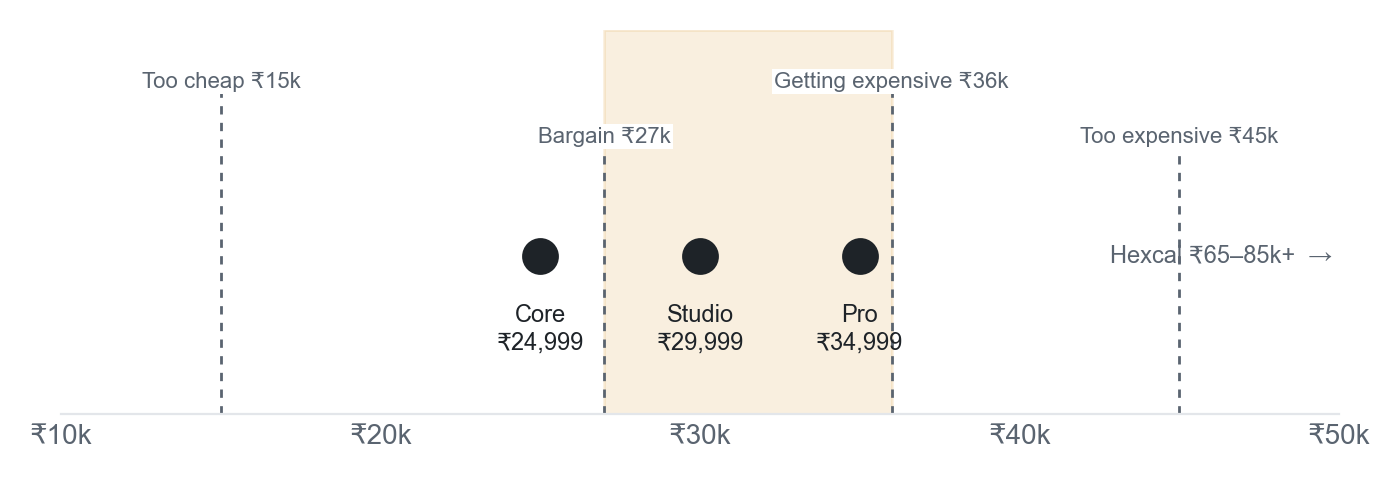
Good-better-best tiers, priced against what customers already spend on the DIY bundle and anchored against imports, not against cost. The Van Westendorp questions put the acceptable range between a "bargain" at about ₹27k and "getting expensive" at about ₹36k. Core sits just below the bargain point as the entry; Studio is the hero in the middle; Pro sits just under "expensive".
Launch test
₹2,000 off for deposit holders as an early-bird reward. Then an A/B test of Studio at ₹29,999 vs ₹31,999 on matched traffic.
Rules for changing price later
With a 46% margin, the break-even math is lopsided, and it sets the rules:
- Raise 10% if it costs fewer than 17.9% of units. That's the plan once accessories land: Studio to ₹31,999, Pro to ₹36,999.
- Cut 10% only if it would add more than 27.8% more units. Use time-bound festival prices, never permanent cuts.
- Price-sensitive buyers get Mez Lite, not a cheaper Core. Protecting the reference price matters more than one segment.
A deposit-led funnel built on stores and creators.
| Stage | What we do | Target |
|---|---|---|
| Awareness | 50 desk-setup creators; PR on "made in India at a third of the import price"; store windows; existing customer emails | 10 M impressions · 25k waitlist |
| Interest | Desk-makeover videos; the online configurator; DIY and import comparisons | 60k configurator sessions |
| Consideration | 20-minute store demos; reviews from pilot owners; 30-day returns | 3,000 demos · 4.5★ |
| Intent | ₹999 refundable deposit; early-bird price; EMI calculator | 1,500 deposits in 8 weeks |
| Purchase | No-cost EMI; delivery in 5 to 7 days; free install; add-ons | 40% deposit → order · ₹32k AOV |
Then a loyalty loop: an install-day welcome, set-up tips, "Share your desk", and a ₹2,000 referral credit, aiming for NPS of 40 or more.
From 10 founding desks to tens of thousands
- 0 → 10. "Founding desks": creators and loyal customers get pilot units at cost in exchange for honest reviews.
- 10 → 100. Waitlist early birds, existing desk and charging customers, founder and startup networks.
- 100 → 1,000. The Diwali launch: creator videos go live together, store demos, PR, referral credits.
- 1,000 → 10,000+. From 15 to 150 stores, marketplaces in Year 2, corporate WFH programmes, tier-2 cities, Pro and Lite.
Paid marketing scales only where cost per order stays at or below ₹3,000, against roughly ₹11,700 of gross margin per unit. Year 1 marketing: ₹2.4 crore for about 7,500 units.
₹10 crore over 12 months, with a gate in the middle.
| Use of funds | Amount |
|---|---|
| Engineering and tooling | ₹3.2 cr |
| Certification and testing | ₹0.4 cr |
| Launch inventory | ₹2.5 cr |
| Launch marketing | ₹2.4 cr |
| Team, 12 months | ₹1.5 cr |
| Total | ₹10.0 cr |
Design frozen
The 150-person survey confirms the tiers and price points.
Go / no-go
1,500 refundable deposits in eight weeks, or we stop before committing tooling and inventory. This is the gate that makes the rest of the money safe to ask for.
Diwali launch
PMF tracking starts with the first cohort.
≈ 28,300 units
About ₹88 crore in revenue.
Where this plan is weakest.
A proposal is only as good as its honesty about what it doesn't know. If this went ahead, these are the assumptions I'd attack first:
- The sample. Five interviews and three concept tests are enough to shape a design, not to size a business. The purchase-intent numbers and the forecast's P value lean on them. That's why the survey and the deposit gate come before tooling.
- The segment filters. "20% have a home desk and ₹20L+ income" and similar cuts are reasoned guesses. The 3.77 M figure moves a lot if any one of them is off by half.
- Online conversion at ₹30k. Two of three testers hesitated at payment. If deposits come in but don't convert, store demos have to carry far more of the funnel than planned.
- Mains safety in a closed box. Heat, surge behaviour and BIS timelines are the hardware risks most likely to push the Diwali date. Pre-certified modules reduce that risk but don't remove it.
- The window. The 12 to 18-month head start is an estimate. If a big electronics brand moves first, the order-of-entry advantage flips.
What a hardware 0 to 1 taught a software PM.
The demo is the product, until there is a product
The single biggest insight came from one tester not getting it until the top came off. That one moment rewrote the messaging, the demo script and the next prototype. In hardware, how people first see the thing is a product decision.
Cut features with evidence, not taste
The app and the drawers were both in my first design, and both felt right. The ratings said otherwise, and cutting them made the product simpler, cheaper and less risky at the same time.
Stage risk where it actually lives
"Hardware is risky" isn't useful. "Most of the risk is in Thunderbolt firmware, and only laptop users want it" is. Finding exactly where risk concentrates is what made a fast MVP possible.
Put a gate in front of the money
A ₹10 crore ask is easier to approve, and easier to stop, when there's a concrete, measurable point where everyone has already agreed to walk away.
The whole job, end to end.
Want to talk through it? I'd love to.
Happy to walk through the research, the prototypes or the numbers, or how I'd approach a 0 to 1 product at your company.